1. What BPC-157 is
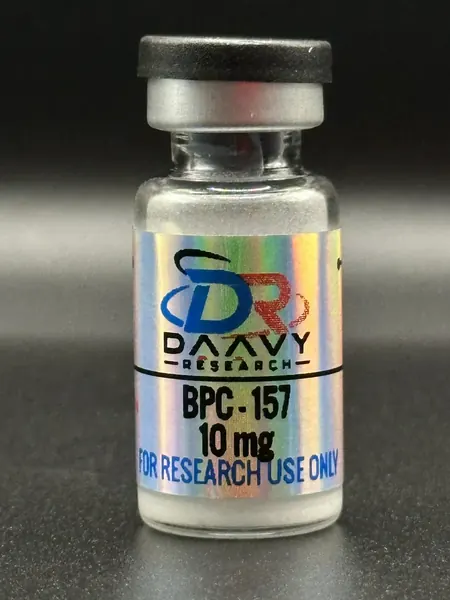
BPC-157 (Body Protection Compound 157) is a synthetic pentadecapeptide — a chain of 15 amino acids — derived from a partial sequence identified in human gastric juice. It is typically supplied as a lyophilized (freeze-dried) powder for laboratory use, code-labeled by milligram amount.
2. What preclinical research has studied
A 2025 systematic review published in HSS Journal by Vasireddi and colleagues screened 544 articles published between 1993 and 2024 and identified 36 studies meeting inclusion criteria — 35 preclinical animal studies and one uncontrolled human chart review. The review reported that BPC-157 has been studied for its association with growth hormone receptor expression and several cell-growth and angiogenesis pathways, alongside reduced inflammatory cytokine markers, in animal models.
Mechanistic work has focused substantially on angiogenesis (new blood vessel formation). A 2017 study in the Journal of Molecular Medicine by Hsieh and colleagues reported that BPC-157 was associated with upregulation of VEGFR2 (a receptor for vascular endothelial growth factor) and activation of the downstream Akt-eNOS signaling pathway in animal models of ischemia and wound healing, with increased angiogenesis observed in treated tissue relative to controls. Earlier work by Brcic and colleagues, published in 2009 in the Journal of Physiology and Pharmacology, documented VEGF upregulation and increased angiogenesis in rat muscle and tendon injury models following administration, though the peptide showed no direct pro-angiogenic effect in isolated cell-culture controls — suggesting an indirect, tissue-context-dependent mechanism rather than a direct one.
A large 2025 pleiotropic-effects synthesis in Pharmaceuticals by Sikiric and colleagues reviewed a broad range of preclinical findings spanning gastroprotection, tissue and tendon healing, and angiogenesis regulation, and discussed the peptide's reported safety profile in the animal models studied. That same review has been the subject of published scientific disagreement in the literature — a separate 2025 commentary exchange in Pharmaceuticals between Sikiric's group and a team led by Józwiak specifically debated the interpretation of BPC-157's effects on the nitric oxide system and angiogenesis, including whether shared angiogenic pathways raise theoretical tumor-related concerns. This is presented here as an example of active, unsettled scientific discussion — not a resolved conclusion in either direction.
3. What this research does not establish
- No completed controlled human efficacy trials. The 2025 systematic review identified zero completed controlled human trials for BPC-157 as of its June 2024 search cutoff.
- No established human clinical safety data. The same review noted the absence of human clinical safety data and reported a plasma half-life under 30 minutes in the studies reviewed.
- Animal-model findings do not automatically apply to humans. Mechanistic and efficacy signals observed in rodent and in vitro models are a starting point for further research, not a demonstrated human outcome.
- Scientific interpretation is still actively contested on specific mechanistic questions, including angiogenesis-pathway implications — see the 2025 commentary exchange referenced above.
4. What a BPC-157 Certificate of Analysis verifies
Because BPC-157 is a synthetic peptide supplied as a lyophilized powder, the analytical questions a COA should answer are: does the vial contain the labeled peptide (identity, typically via LC-MS/MS), how much of it is present relative to the labeled amount (content, via HPLC quantitation), and how pure is the sample (overall purity, via RP-HPLC). See the Interactive COA Decoder for a field-by-field walkthrough and red-flag checklist, and the How to Read a COA guide for the fundamentals.
Sources
- Vasireddi et al. (2025), "Emerging Use of BPC-157 in Orthopaedic Sports Medicine: A Systematic Review," HSS Journal — PubMed
- Sikiric et al. (2025), "Stable Gastric Pentadecapeptide BPC 157 as a Therapy and Safety Key," Pharmaceuticals (Basel)
- Sikiric et al. (2025), comment on Józwiak et al., Pharmaceuticals (Basel) — PMC
- Józwiak et al. (2025), reply to Sikiric et al., Pharmaceuticals (Basel) — PMC
Research-use disclaimer
This page summarizes published preclinical literature for educational purposes. It has not been evaluated by the U.S. Food and Drug Administration. DAAVY Research supplies BPC-157 only for legitimate laboratory, analytical, academic, or institutional research; it is not intended for human or veterinary use, consumption, diagnosis, treatment, or prevention. Nothing on this page is dosing, medical, or legal advice. See our complete research-use policy.