
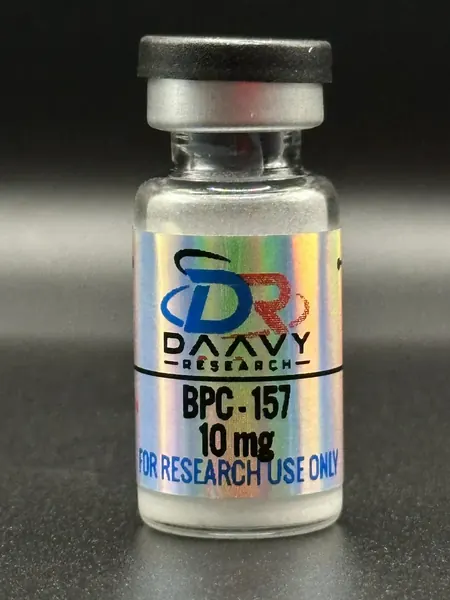
1. What BPC-157 is
BPC-157 (Body Protection Compound 157) is a synthetic pentadecapeptide — a chain of 15 amino acids — derived from a partial sequence identified in human gastric juice. It is typically supplied as a lyophilized (freeze-dried) powder for laboratory use, code-labeled by milligram amount.
2. Published literature
This page does not summarize biological findings, outcomes, or mechanisms. Peer-reviewed publications on BPC-157 can be located through PubMed. The identity, labeled amount, and analytical results for the DAAVY Research listing are documented in its Certificate of Analysis.
3. Scope of this page
- This page is educational. It documents the identity and analytical testing of a laboratory research material.
- No claims are made about efficacy, safety, or suitability for any use.
- For laboratory research use only. Not for human or veterinary use.
4. What a BPC-157 Certificate of Analysis verifies
Because BPC-157 is a synthetic peptide supplied as a lyophilized powder, the analytical questions a COA should answer are: does the vial contain the labeled peptide (identity, typically via LC-MS/MS), how much of it is present relative to the labeled amount (content, via HPLC quantitation), and how pure is the sample (overall purity, via RP-HPLC). See the Interactive COA Decoder for a field-by-field walkthrough and red-flag checklist, and the How to Read a COA guide for the fundamentals.
Sources
Research-use disclaimer
This page summarizes published preclinical literature for educational purposes. It has not been evaluated by the U.S. Food and Drug Administration. DAAVY Research supplies BPC-157 only for legitimate laboratory, analytical, academic, or institutional research; it is not intended for human or veterinary use, consumption, diagnosis, treatment, or prevention. Nothing on this page is dosing, medical, or legal advice. See our complete research-use policy.